
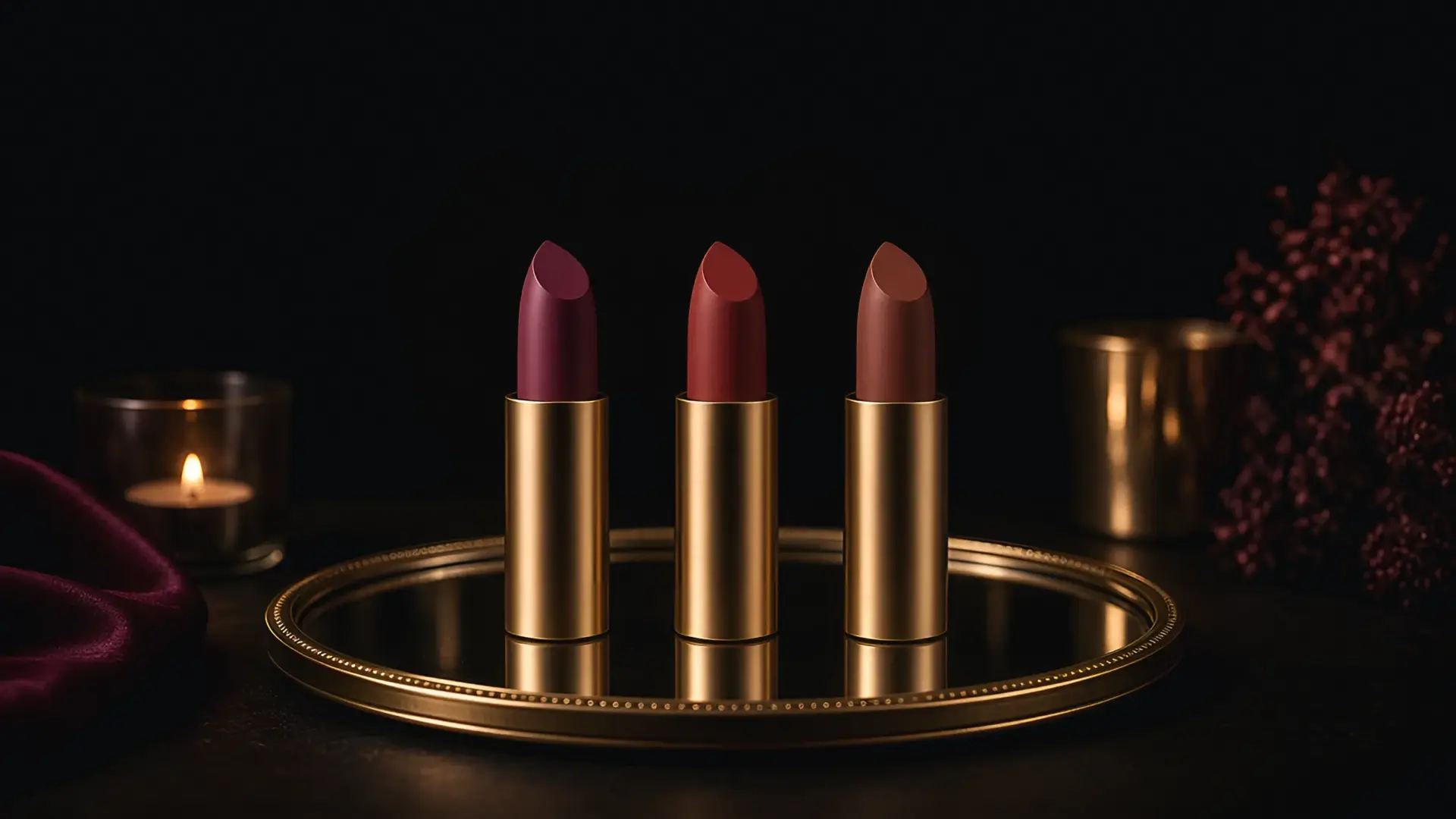
When the coats come out, the lipstick gets darker. The three fall lipstick shades that return every year are berry, brick and brown, and each one flatters a different undertone. This guide covers how to read your undertone, which shade family to start with, and a simple method for keeping a deep color neat from dinner to the last train home. We close with the safety basics the FDA recommends for any makeup you own.
Start with your undertone
Skin tone describes how light or deep your skin is. Undertone, by contrast, is the color beneath the surface, and it usually falls into one of three groups: cool, warm or neutral. Undertone matters more than depth when you choose fall lipstick shades, because a shade that fights your undertone can look flat or harsh.
Three quick checks
These are common rules of thumb, not lab tests, so use them together.
- The wrist check. Look at the veins on your inner wrist in daylight. Bluish or purple veins often suggest cool undertones, while greenish veins often suggest warm ones.
- The metal check. Notice which jewelry you reach for. People who prefer silver often have cool undertones, and people who prefer gold often run warm.
- The white check. Hold bright white fabric and then cream fabric near your face. If bright white looks better, you may be cool. If cream looks better, you may be warm.
When the results disagree, you are probably neutral. That is good news, since neutral undertones can wear most shades.
Berry: the cool-toned classic
Berry covers the family of deep pinks, plums, wines and raspberry reds. These shades carry blue or purple in their base, so they tend to flatter cool undertones.
For fair skin, a sheer berry stain or a soft raspberry reads polished rather than heavy. On medium skin, a true wine color gives the most contrast. On deep skin, rich plum and blackberry shades look saturated and deliberate.
If you are warm but love berry, choose one with a little red in it. A red-leaning berry bridges the gap between the two families.
Undertone matters more than depth when you choose fall lipstick shades.
Brick: the warm-toned answer
Brick sits between red and brown. Think rust, terracotta and burnt orange-red. These fall lipstick shades carry orange or yellow in their base, so warm undertones wear them best.
On fair warm skin, a soft terracotta looks natural. Medium skin can take a true brick red. Deep warm skin suits the deepest rust and chili shades, which glow rather than fade.
Cool undertones can still wear these fall lipstick shades. In that case, look for a brick that leans toward red rather than orange.
Brown: the shade with the widest range
Brown lipstick is a perennial fall favorite, and it still divides people. The trick is choosing the right brown, because the family is broad.
Finding your brown
Cool undertones tend to look best in browns with a mauve or rose base. Warm undertones suit browns with a caramel, cinnamon or chocolate base. Neutral undertones can move between the two.
Depth matters here too. On fair skin, a light taupe or rosy nude-brown is easier to wear than a dark espresso. On deep skin, by contrast, a rich chocolate or deep mahogany gives clear definition.
Finish changes everything
A matte brown looks modern and graphic. A satin or cream brown feels softer. If a brown looks too severe on you, try the same shade in a sheer or glossy finish before you rule it out.
The liner, blot, reapply method
Dark shades show every smudge, so application matters more in fall than in summer. This three-step method keeps the edges clean.
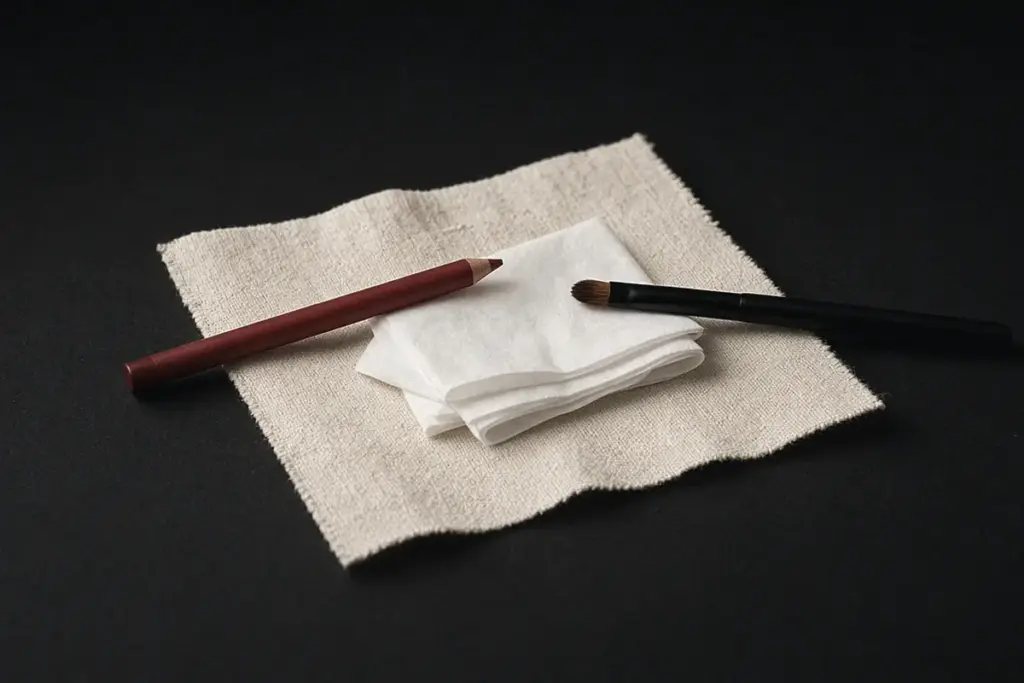
Step one: line the whole lip
First, start with smooth lips and a thin layer of balm. Let it sink in for a few minutes, then blot off the excess. Next, choose a liner close to your lipstick color. Trace the outline, then fill in the entire lip with the pencil. A fully lined lip gives the color something to hold on to, and if the lipstick wears off, the liner underneath still looks finished.
Step two: apply and blot
Apply the lipstick with a small brush for a precise edge, especially with dark fall lipstick shades. Then press a single ply of tissue between your lips. Next, add a second thin layer. Two thin layers tend to wear more evenly than one thick coat.
Step three: clean up and reapply
For a sharp line, run a little concealer around the outer edge with a flat brush. Later in the evening, check the inner lip first, since color usually fades there first. To reapply, blot first, retrace with liner, and then add one thin layer of lipstick. Carry the liner and lipstick together so you can repeat the process quickly.
If you still need a lipstick to practice with, our fall shopping list includes a matte formula in a wide shade range.
Pair the lip with the rest of the look
A dark lip draws attention, so the rest of the face can stay simple. Keep eyes soft with mascara and a neutral shadow. Also, consider your hair. A sharp cut, such as a bob, frames the mouth. For ideas, see our guide on how to ask for a bob haircut.
Safety basics for any lipstick
New fall lipstick shades mean new products in your makeup bag. The FDA’s guidance on using cosmetics safely applies to all of them.
- Read the label, and follow all directions and warnings.
- Wash your hands before you use the product.
- Do not share makeup.
- Keep containers clean and tightly closed, and protect them from temperature extremes.
- Throw away cosmetics if their color or smell changes.
- Do not use lip liner on your eyes.
The FDA also points out that the law does not require cosmetics to carry an expiration date. Instead, the agency suggests marking the container with the date you open it. In addition, the FDA does not define “hypoallergenic,” so the word does not mean a product will not cause a reaction.
If you react to a new shade
According to the FDA’s page on allergens in cosmetics, reactions to cosmetics most often appear as itchy, red rashes. If you have a reaction, the FDA’s safety page says to stop using the product and call your healthcare provider. A provider may recommend patch testing to identify the cause. The FDA describes how it works: a physician places a small amount of allergen on the skin, covers it for 48 hours, and then checks the skin after 72 to 96 hours. You can also report the problem to the FDA.
Fall lipstick shades: quick answers
What are the classic fall lipstick shades?
Berry, brick and brown are the three families that return each fall.
Which shade suits cool undertones?
Berry tends to suit cool undertones, along with mauve-based browns and red-leaning bricks.
Which shade suits warm undertones?
Brick tends to suit warm undertones, along with caramel and chocolate browns and red-leaning berries.
How do I make a dark lipstick last?
Line and fill the whole lip, apply thin layers with a brush, blot between layers and carry the liner for touch-ups.
Does lipstick expire?
The law does not require an expiration date on cosmetics, according to the FDA. Mark the date you open a product, and throw it away if its color or smell changes.
Choose the family that fits your undertone, take a few minutes with the liner, and a dark lip will carry you through the season.