
A bob haircut is quick to cut and slow to grow out, so the words you use in the chair matter. “Short” means something different to every stylist. “A little off the ends” can mean half an inch or four. The fix is vocabulary. Learn the four main bobs, bring the right pictures, and say plainly what you do not want.
The cut has a long history in print. F. Scott Fitzgerald published “Bernice Bobs Her Hair” in 1920, when bobbed hair still counted as a scandal. A century later, the conversation is mostly about where the line falls.
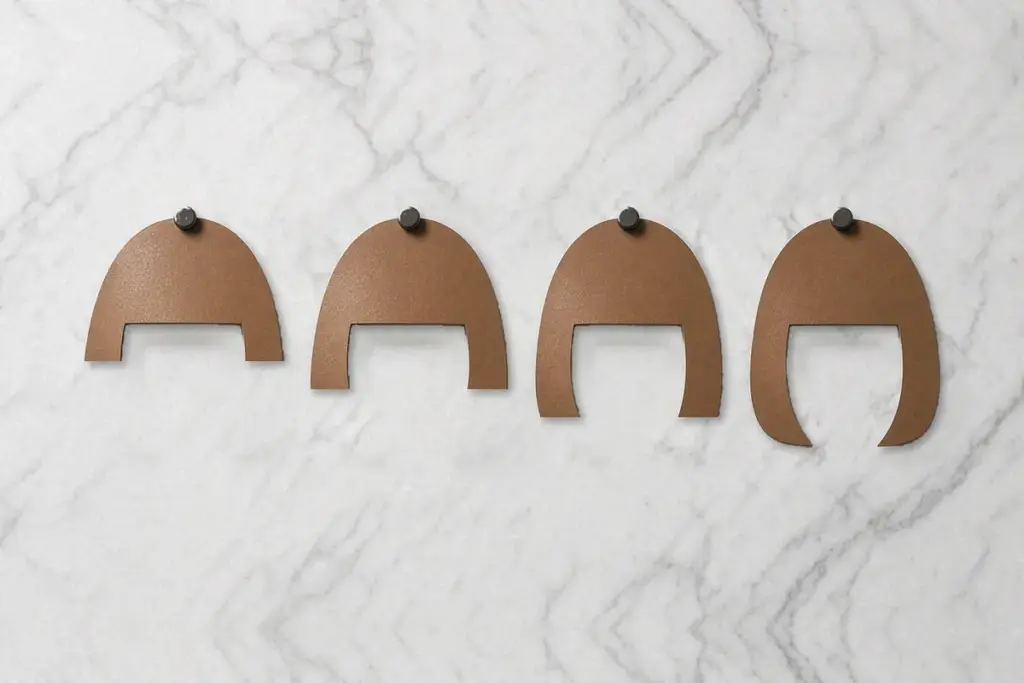
The four bob haircut styles to know
Each of these describes a shape, not a rule. A good stylist adapts them to your hair, so treat the names as a shared starting point.
Blunt bob
A blunt bob is one length, cut to a single clean line. It usually sits somewhere between the chin and the jaw. Because there are no layers, the ends look thick and graphic. It suits fine or straight hair well, since the solid line makes hair look fuller. On very thick hair, though, it can turn into a triangle unless the stylist removes some weight inside.
Layered bob
A layered bob keeps the overall length but adds shorter pieces through the back and sides. Those layers take out bulk and add movement. As a result, it is the forgiving choice for thick or wavy hair. Ask how short the shortest layer will be. Otherwise, you may get more lift at the crown than you wanted.
French bob
The French bob is the shortest of the four. It usually falls between the cheekbone and the jaw, and it is often paired with a fringe. The finish is a little undone, with a soft, slightly bent texture rather than a sleek line. In other words, it is the bob that looks best a day after washing.
Italian bob
The Italian bob is fuller and a touch longer, around the jaw or just below. The ends are soft and slightly rounded, and the shape has volume at the sides. It reads as polished and grown-up, and it works on most hair textures. For more hair and beauty coverage, browse our Style section.
Other bob shapes you may hear about
A few more bob haircut names come up in salons. A long bob, or lob, falls between the jaw and the collarbone, which makes it the easiest step down from long hair. An A-line bob is shorter in the back and longer toward the face. A stacked bob adds short, tight layers at the nape for height at the back. If a stylist uses one of these words, ask them to point to the length on your own head.
What to say when you ask for a bob haircut
Start with the line. Name a landmark instead of a measurement: the lip, the chin, the jaw, or the top of the neck. Stylists think in landmarks, and so does your mirror.
Then describe the edge. Say “blunt” if you want a solid line, or “soft” if you want the ends broken up. Also say whether you want layers, and if so, where.
Next, talk about time. Tell the stylist how long you spend on your hair each morning. If the answer is five minutes, a cut that needs a round brush every day will not survive the month.
Finally, mention your part and your habits. Do you tuck your hair behind your ears? Do you wear it up for the gym? These details change where a stylist cuts.
The photo of the cut you hate is often the most useful picture you bring.
Bring three photos, including the one you hate
Pictures beat adjectives. Bring three, and choose them with care.
- One front view of the length and shape you want.
- A side or back view, because the back of a bob haircut is where most surprises happen.
- One photo of what you do not want. It might be too short, too stacked, or too sleek.
The photo of the cut you hate is often the most useful picture you bring. It rules out a whole set of choices in a few seconds. Also, look for photos of hair with a similar texture to yours. A sleek bob on straight hair will not look the same on curls, and that is fine, as long as everyone knows it in advance.
Before the appointment
Arrive with your hair styled the way you wear it most days. A stylist can see your natural part, your cowlicks, and how your hair falls. If you usually air-dry, say so, and do not blow it out first.
Ask for a consultation before the cut starts, even a short one. Use it to repeat the line, the edge, and the photo you hate. Then ask the stylist to tell you back what they plan to do. If the summary sounds wrong, it is far easier to fix now than after the first snip.
If you are going much shorter, consider doing it in two visits. A collarbone cut this week and a chin-length bob haircut next month gives you time to adjust.
Keeping the shape between appointments
A bob haircut shows growth fast. Plan on a trim every six to eight weeks to keep the line clean, and expect blunt cuts to need it most. Book the next appointment before you leave, so the shape never drifts.
Styling basics
For a smooth finish, blow-dry with a round brush, pulling the ends under. For a bent, French-bob texture, dry with your fingers, then press a few sections with a flat iron. A light texture spray adds grip. Meanwhile, a heat protectant is worth using whenever you style with hot tools.
Product safety
Hairspray and shampoo count as cosmetics, and the FDA’s guide to using cosmetics safely has advice that applies here. Read the label, and follow all directions and warnings. Keep containers clean and tightly closed, and protect them from temperature extremes. If a product changes color or smell, throw it out. Use sprays in a well-ventilated room, away from any open flame. The FDA also notes that it does not define “hypoallergenic,” so do not assume a product labeled that way cannot cause a reaction. If you do have one, the agency asks you to report it through its cosmetic complaint process.
Bob haircut questions, answered
Which bob haircut suits thick hair?
A layered bob, or an Italian bob with weight removed inside. Both keep the shape from spreading at the ends.
Can I get a bob with curly hair?
Yes. Ask for your bob haircut on dry hair, or at least a final shaping once it dries, since curls shrink as they dry. Bring photos of curly bobs specifically.
How often should I trim a bob?
Plan on every six to eight weeks. A blunt cut shows growth first, so it may need a trim sooner.
How do I grow out a bob?
Keep trimming, but take less each time. A stylist can shape the back so it grows in evenly with the front, which avoids the awkward mullet stage. How long it takes to reach the collarbone depends on how fast your hair grows, so be patient.
What should I wear with a new bob?
A short cut puts the face and neck forward, so earrings and a strong lip do a lot of work. The fall runways are a good place to look for ideas, and our guide to watching Paris Fashion Week explains how to follow the shows. And for the evenings while you get used to the new cut, see what to watch in October.
Bring the three photos, name the landmark, and book the six-week trim before you pay.